You’ve been told your muscles are tight. You’ve tried stretching, foam rolling, massage. Same knot. Same pain. Dry needling in Denver gets to where those other things can’t reach.
Dr. John Brockway here. Glendale Chiropractic. I hold both a chiropractic license and a Colorado acupuncture license. Full needle training, not a weekend course. That matters. Call 720-889-1659.
A trigger point is a small patch of muscle fiber locked in contraction. Won’t let go on its own. Blood flow chokes off. Waste products accumulate. Pain signals fire into places nowhere near the actual source. That headache behind your eye? Trigger point in your upper trap. Happens all the time.
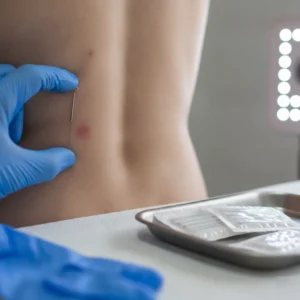
When a thin filiform needle goes directly into that trigger point, it creates a local twitch response. The fiber finally releases. At the tissue level: contraction lets go, fiber length normalizes, blood flow comes back, chemical irritants clear out, pain signaling resets.
It’s a mechanical and neurological reset your body couldn’t produce on its own. The cycle was locked. The needle breaks it. Thinner than a blood draw needle, most patients feel the twitch more than the insertion. That twitch is the moment things start changing.
Dry needling works when tight, knotted muscle tissue is part of the problem. That covers a lot:
Neck pain and tension headaches from desk work or poor posture
Low back tightness that won’t quit no matter how much you stretch
Shoulder and upper trap pain radiating into the arm or between the shoulder blades
Hip pain from deep glute or piriformis trigger points
Sports injury recovery — runners, CrossFit athletes, weekend warriors who tweaked something
Plantar fasciitis and calf tightness
Pelvic floor dysfunction where muscular tension is a contributing factor
Many patients come in after massage and cortisone only helped short term. Cortisone reduces inflammation. Doesn’t release a locked trigger point. Dry needling works at the muscle fiber level — different mechanism entirely.
When nerve irritation or joint dysfunction is part of the picture alongside muscle tightness, dry needling gets combined with chiropractic adjustment or soft tissue therapy. Needle handles the muscle. Adjustment handles the joint. They work together.
Works best when it’s not the only thing happening. Here’s the logic: tight muscle in your upper back pulls your spine out of alignment. Adjust the spine — muscle drags it right back. Dry needling releases that grip first. Then the adjustment holds.
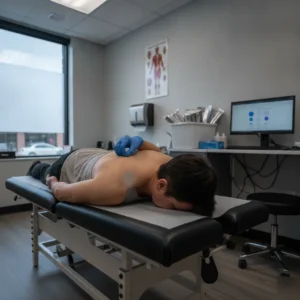
Session flow: exam to find which muscles are locking your joints, dry needling those trigger points, then spinal adjustment once the soft tissue has let go. Order matters. Muscle first, then joint. Better results, less soreness.
Two or three dry needling sessions and some patients’ adjustments start holding on their own. Chronic injury patterns need it longer. No standard answer, we track what’s actually happening and adjust.
No. Different treatment, different goals. Acupuncture works from traditional Chinese medicine principles, energy pathways, systemic balance. Dry needling targets specific trigger points in muscle tissue. Needle looks similar. Mechanism, training, and purpose are not.
Because I hold both licenses, dry needling here is performed with full acupuncture training behind it. That’s not standard everywhere.
Real conversation first, where it hurts, how long, what you’ve tried. Then hands-on assessment. Finding trigger points that are actually driving your pain, which usually aren’t where the pain shows up.
Needling process: clean the skin, thin sterile needle into the trigger point, twitch response, needle out. One trigger point takes about 30 seconds. First session covers two to four zones.
Some patients feel relief before they leave. Others notice the shift the next morning. Two to three visits is when most people feel real progress.
Loose clothing. Light meal beforehand. Skip intense exercise that day. Walk through your full pain history when you arrive — the detail helps find the actual source faster.

Soreness for 24 to 48 hours is normal, feels like a hard workout. Deep ache, not sharp pain. Your muscles just went through a reset.
What to do: drink more water than usual, flushes metabolic waste from the trigger points. Heat not ice, warm towel for 15 minutes, aids blood flow. Light movement only, walking fine, heavy training not. Pay attention to what changes, less tension, better range of motion, those matter.
By day three soreness is gone. What remains is the actual improvement. Soreness past 72 hours, call us.

How many sessions before I feel a difference? First or second session for many patients. Most conditions respond within four to six visits. Chronic tension patterns take longer than fresh sports injuries. We adjust as we go.
Can dry needling help with desk-work headaches? Yes, one of the most common reasons Denver patients call us. Hours at a desk tighten the upper traps and the muscles at the base of your skull. Those trigger points fire pain straight into your head, often behind one eye. Stretching and massage can’t fully reach them. Dry needling can.
Safe if I’ve already had cortisone shots? Yes. Cortisone reduces inflammation, doesn’t touch the locked trigger point. Different mechanism. We review your full treatment history before starting.
How do I prepare? Loose clothing. Light meal. Skip hard exercise that day. Know your pain history, when it started, what makes it worse, what you’ve already tried.
Ready to Schedule?
720-889-1659. Glendale Chiropractic, 425 S. Cherry St. Suite 307, Denver CO 80246.
Cherry Creek, Capitol Hill, Highlands, Wash Park, Glendale, we’re central to all of it.