
Denver’s Trusted Chiropractor for Lasting Pain Relief, Not Just Temporary Fixes
What’s Covered on This Page
Most patients who walk into this office have already tried a lot. Stretching, ice, heat, over-the-counter pills, maybe even injections. The pain keeps coming back. That is frustrating, and we hear it every week.
Pain Neutralization Technique — PNT — was developed by Dr. Steven Kaufman as a gentle, neurologically based approach to trigger point release. Where most manual trigger point techniques use deep, sustained pressure, Kaufman’s approach uses light, precise contact to give the nervous system a specific signal. The muscle releases on its own rather than being forced.
Here is what that looks like in practice. We locate the tender point driving the pain pattern. We apply a controlled counter-pressure at just the right angle. The nervous system responds by releasing the muscle contraction. We recheck the point to confirm the tenderness has dropped.
The relief often happens right there on the table. Not days later. Not after ten sessions. Most patients feel a meaningful difference during the first visit.
The back pain you are feeling is not always where the real problem lives. Someone comes in with low back pain, but the trigger point is in the hip or deep in the glute. That is why rubbing the sore spot at home does not help. Pain neutralization gets to the source. No needles, no guessing. Just the body finally letting go of tension it forgot how to release on its own.
For patients who need deeper trigger point release, dry needling alongside PNT may be recommended as part of a broader soft tissue approach.
You would be surprised how many different problems respond to pain neutralization technique. Most patients walk in thinking it only works for back pain. It does, but that is just the start.
The common thread is this: if a trigger point or tender point is driving the pain, PNT can usually quiet it down fast. Conditions that respond well include:
Chronic back pain and stiffness that keeps reasserting itself despite stretching and rest
Sciatica and radiating leg pain caused by tight muscles pulling on nerves
Shoulder, elbow, and wrist pain from repetitive strain or old injuries that never healed right
Headaches and migraines triggered by tension patterns in the upper back
Hip pain that makes sitting or climbing stairs miserable
Most patients with these issues have already tried stretching, heat packs, maybe even injections. The pain keeps coming back because nobody addressed the actual trigger point holding the pattern in place.
PNT also works well alongside other treatments. A patient getting a chiropractic adjustment for a pinched nerve often holds that adjustment longer when the surrounding trigger points are cleared first. The muscle stops fighting the correction.
Myofascial trigger points are a primary source of painful symptoms in the majority of chronic musculoskeletal cases. That lines up with what we see every day in practice.
You hiked Lookout Mountain on Saturday. Hit a cycling loop through Wash Park on Sunday. Then Monday morning you woke up and couldn’t turn your head. Sound familiar?
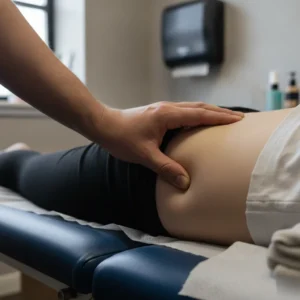
You hiked Lookout Mountain on Saturday. Hit a cycling loop through Wash Park on Sunday. Then Monday morning you woke up and could not turn your head. Sound familiar?
Trigger points form when muscle fibers get overloaded and cannot release on their own. They lock up into tight, painful knots that refer pain to other areas of the body. A trigger point in the shoulder blade can send sharp pain down the arm. One in the hip can make the knee ache for weeks.
Altitude plays a role too. At 5,280 feet, muscles work harder to get oxygen during exercise. Recovery takes longer. Without enough downtime between trail runs and gym sessions, trigger points just keep building.
Here is what makes trigger points tricky. They do not always hurt where the problem actually is. The pain might be in the upper back, but the real source is a locked-up spot between the ribs. That is why pain neutralization technique works so well, it locates the actual trigger point and uses gentle tissue manipulation to get the muscle to release. No deep tissue bruising. No gritting your teeth.
Common activities that build trigger points in active patients:
Weekend hiking and trail running on uneven terrain
Long hours on a bike, road or mountain
Skiing and snowboarding with repeated falls or tense posture
Sitting at a desk all week then going hard on the weekend
That weekend warrior pattern is the most common one we see. The body does not get a chance to adapt. It just accumulates tension until something gives.
You’re probably wondering what this actually looks like. That’s fair. Most people who walk into our Denver office have never heard of Pain Neutralization Technique before. They just know something hurts and nothing else has worked.
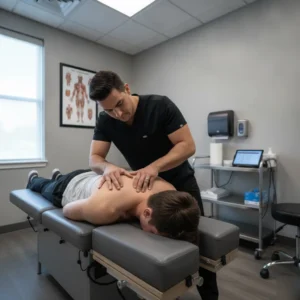
Here’s the honest truth. It’s surprisingly simple, it’s gentle, and most people are a little shocked at how fast they feel a difference.
Your first visit follows a clear process so exactly what we’re working with:
The whole first visit usually takes about 30 minutes. People coming from the Capitol Hill area or up from Wash Park sometimes expect something more intense. But that’s the point. Your body responds better when it isn’t bracing against force.
And here’s what surprises people most. Some patients notice mild temporary soreness in the first 24 hours, which resolves on its own. Not like deep tissue massage where you feel beat up the next day. You walk out feeling lighter and looser, sometimes a little confused about how something so gentle actually did something.
Patients say the same thing afterward: “Why didn’t I try this sooner?” We hear it often enough that it almost doesn’t register anymore. But it still means something every time.
Ready to see what a session feels like? Give us a call.
Pain Neutralization Technique works when it’s part of something bigger. We don’t use it as a standalone treatment and send you on your way. That’s not how lasting results happen.
Think of PNT as one tool in a full toolbox. It handles the tender points and trigger areas that keep your body locked in a pain cycle. But the reason those tender points showed up in the first place usually comes down to structural problems, postural imbalances, or old injuries that never healed right. So we go after the root cause too.
Here’s what a typical plan might look like for someone we see at our Denver office:
The patients who get results are the ones who commit to the full plan. PNT gives you relief fast. The structural corrections give you relief that stays.
People near Capitol Hill and Wash Park tell us this all the time. They tried one thing somewhere else, felt better for a week, then the pain crept right back. That’s because nobody addressed the layers underneath. We don’t make that mistake.
Not sure what combination of care you actually need? That’s what your first visit is for. We’ll figure it out together, no guesswork involved. Give us a call and we’ll get you started.
Common questions about Pain Neutralization Technique (PNT) in Denver
Many people feel relief during their very first session. PNT targets the trigger point directly, and your nervous system often responds right there on the table. That said, how many visits you need depends on how long the tension has been building. A fresh injury might clear in one or two visits. Layered trigger points from years of weekend hiking or desk work may take a few more sessions to fully unwind. We reassess after each visit so we’re never guessing.
PNT is nothing like deep tissue massage. The pressure we use is light and precise — most people are surprised by how gentle it feels. There’s no gritting your teeth, no soreness the next day. We’re not trying to force the muscle to release. We’re giving your nervous system a specific signal so it releases on its own. If you’ve avoided bodywork because it left you feeling worse, PNT is usually a very different experience.
Yes, and this is one of the most common reasons Denver residents come see us. The weekend warrior pattern — sitting at a desk all week, then going hard on a trail or bike loop — stacks trigger points fast. Add Denver’s altitude, where your muscles work harder to get oxygen, and recovery slows down. PNT locates the locked-up spots feeding your pain and gets them to release. Many active people in the Wash Park and Cherry Creek areas find their recurring pain finally stops cycling back.
That’s exactly right, and it surprises a lot of people. Trigger points refer pain away from where they actually live. A locked spot in your hip can make your knee ache for weeks. A trigger point between your ribs can feel like neck pain. That’s why rubbing the sore spot at home doesn’t fix it — you’re treating the symptom, not the source. During your exam we trace the pain pattern back to the actual trigger point, which is often somewhere you’d never expect.
We start by going through your pain history and doing a hands-on exam to locate the trigger points driving your symptoms. Then we will sometimes begin treatment the same day. You’ll lie fully clothed on the table while we apply gentle, targeted pressure to each tender point. We recheck each spot before moving on to confirm the tenderness has dropped. Most visits run about 10 to 15 minutes, and many people leave feeling noticeably different than when they walked in.
Schedule Your Initial Examination. Call +17208891659 today.