
Denver’s Trusted Chiropractor for Lasting Pain Relief, Not Just Temporary Fixes
What’s Covered on This Page
Most people walk in thinking we’re just going to watch them bend forward and touch their toes. That’s not even close.
A DynaROM Motion Study measures two things at the same time. It tracks your range of motion through sensors while recording the electrical activity in your muscles. Think of it like this: your body tells one story when you move, your muscles tell another. We capture both stories and compare them. When those two signals don’t match up, something real is going on beneath the surface.
Here’s what makes this different from a standard exam. We’re looking at:
We see patients in Denver all the time who look fine standing still. No visible swelling. No obvious problem. But the second they start moving through the study, the data tells a completely different story. Muscle activity spikes right where they’ve been telling us it hurts. That’s objective proof, not just someone’s word.
Patients who come to us have already been told “everything looks normal” by someone else. An MRI might show a disc issue, sure. But it can’t show what happens when you actually move. For structural findings, we pair DynaROM with advanced x-ray analysis to get a complete picture of both function and alignment. That’s the gap this study fills.
Surface EMG combined with motion analysis provides measurable data on soft tissue injuries that static imaging misses. That matters a lot when you need documentation for a personal injury chiropractic evaluation or when your treatment plan needs real numbers behind it.
The readings don’t lie, they can’t be faked. And that gives both of us a clear starting point for what comes next.
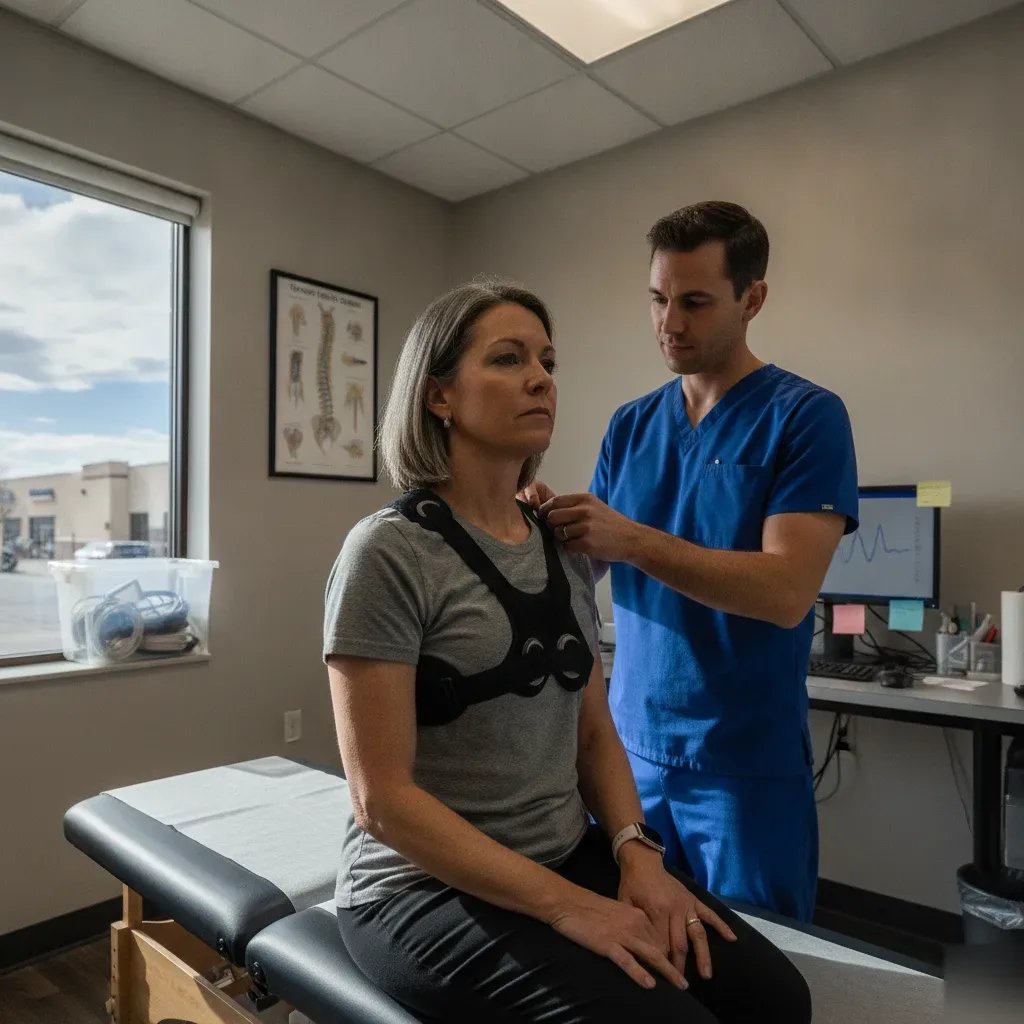
People always ask us what happens during the actual appointment. Fair enough. It’s not something most folks in Denver have heard of before they walk through our door. So here’s exactly how it goes.
The whole process takes about 30 minutes. Most patients throughout Denver tell us it’s the first time anyone has actually shown them proof of what’s going on inside their body.
And that’s really the point.
We’ve run tons of these studies in our office, and the pattern is almost always the same. Someone comes in frustrated because they’ve been told nothing is wrong. Their MRI looked fine. Their X-rays were clean. But they’re still hurting. The DynaROM picks up what those static images miss because it measures you while you’re actually moving. A still picture can’t show muscle guarding. This can. That changes the whole conversation between you and your doctor, between you and an insurance adjuster, between you and anyone who questions whether your pain is real.
Here’s the thing most people don’t realize about pain. Your body reacts to it before your brain even registers what’s happening. When you move through a range that hurts, your muscles involuntarily tighten up to protect the area. That’s called muscle guarding. And it’s the single most important piece of data a DynaROM Motion Study captures.
You can’t fake muscle guarding. You can’t suppress it on purpose either.
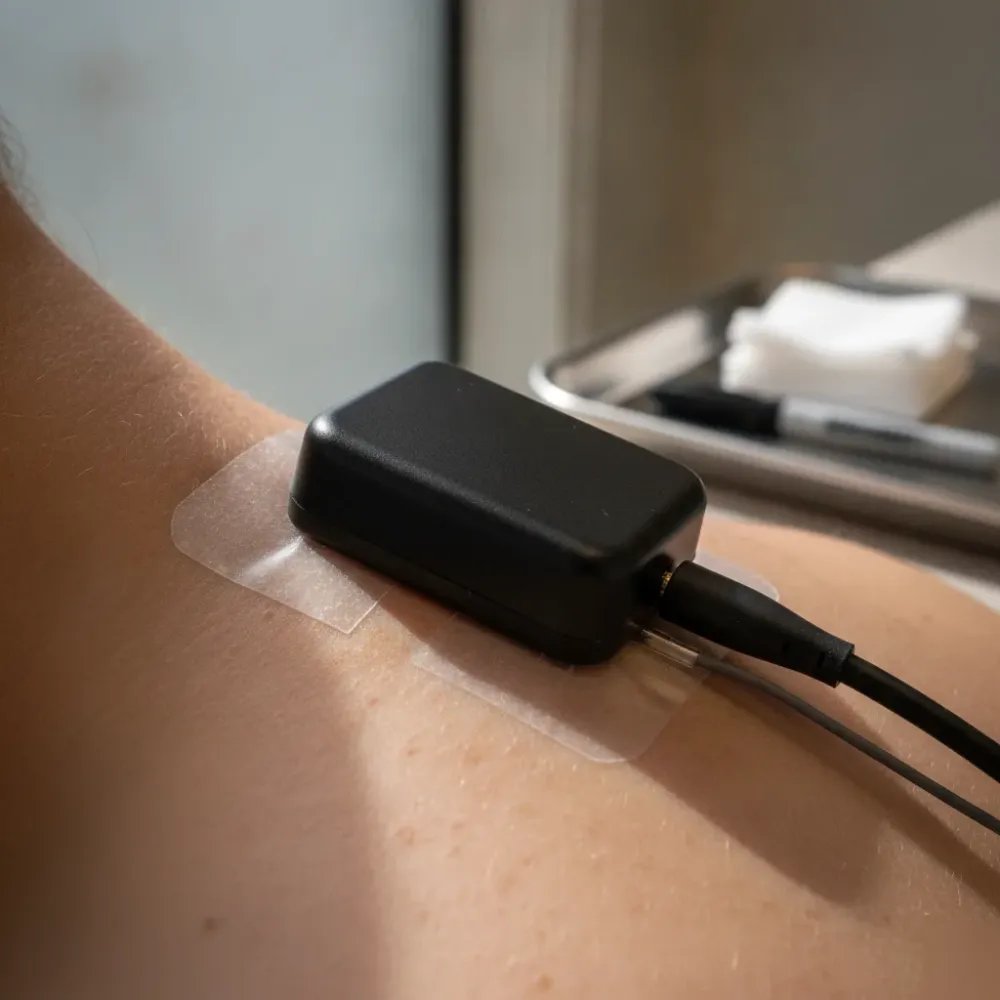
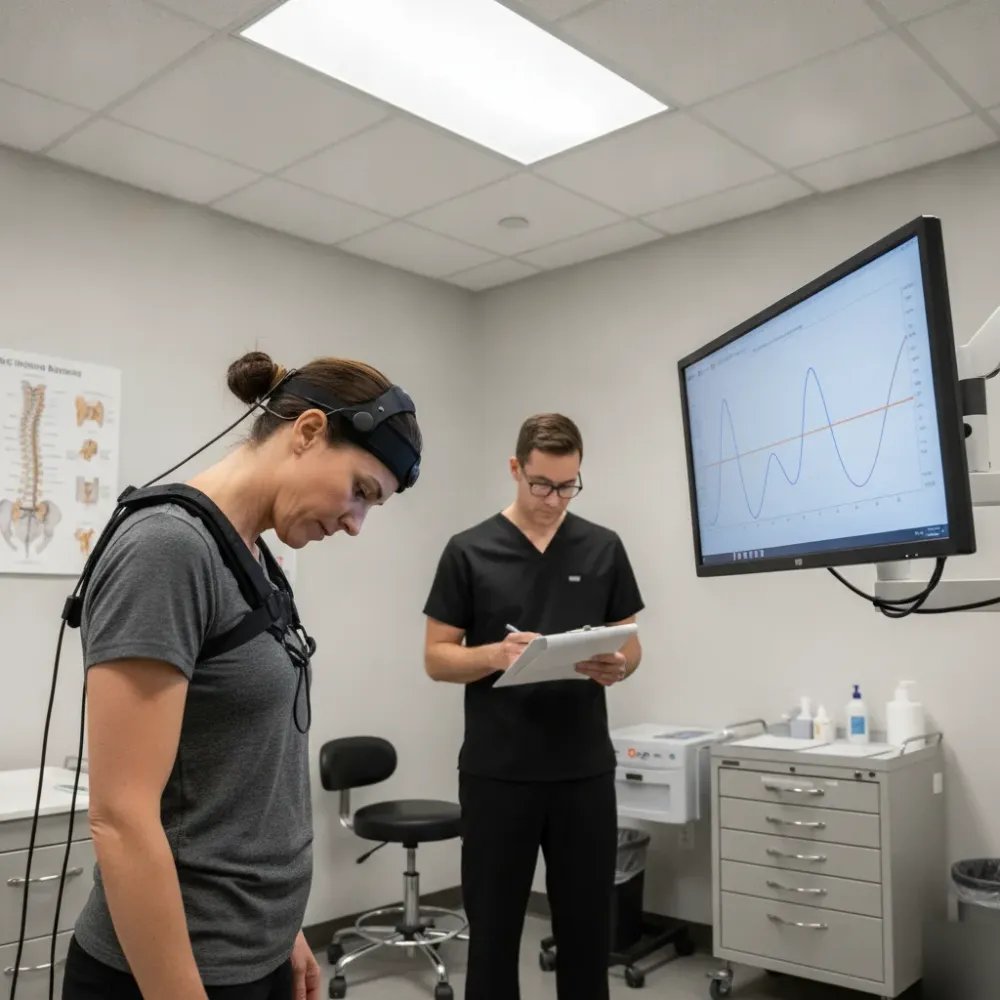
During the study, surface EMG sensors are placed on your skin over the muscles we’re evaluating. These sensors pick up the electrical activity in those muscles while you move. So when you bend forward and your low back muscles fire up at a specific point in the motion, the system records that spike in real time. It’s objective and measurable, and it shows up on a graph that anyone can read.
We see patients in Denver every week who’ve been told their pain is “subjective” or hard to prove. Maybe an insurance adjuster questioned their claim after a car accident. Maybe a doctor looked at an MRI and said everything appeared normal. That’s incredibly frustrating when you’re the one living with the pain. The muscle guarding data changes the conversation because it captures what your body is actually doing, not just what you’re reporting.
Think about what makes this different from a standard exam:
Surface EMG is a validated method for detecting abnormal muscle activation patterns associated with pain. Understanding how pain and suffering are defined in medical and legal contexts helps clarify why objective, measurable data like this carries so much weight in clinical and legal settings. That’s exactly what we’re measuring here. The data doesn’t have an opinion, it just shows what’s real.
For patients across Denver dealing with personal injury claims, this matters. A lot. When your muscle guarding data lines up with your reported symptoms, it creates a clinical picture that’s very difficult to argue against. We’ve had cases where this single study changed the entire direction of a patient’s claim. Not because we advocated for one side. Because the numbers spoke for themselves.
Ready to see what your body is actually telling us? Give us a call.
Need help with DynaROM Motion Study?
Schedule Your Initial Examination. Glendale Chiropractic is ready to help.
You got rear-ended on I-25 last Tuesday. You felt okay at the scene. Maybe a little sore the next morning. But now it’s been a week, your neck won’t turn right, and you’re wondering if something’s actually wrong.
This is the story we hear almost every day.
Here’s what matters most. A DynaROM Motion Study done too early can miss the full picture because your body is still in acute inflammation. Done too late, and insurance adjusters start questioning whether the injury really came from the accident. The window we recommend for most Denver car accident cases is between 10 and 21 days after the collision. That gives your body time to settle past the initial shock while still capturing real, measurable dysfunction.
Soft tissue injuries don’t always show up on day one. Muscle guarding kicks in, adrenaline masks pain, and you convince yourself it’ll go away. By week two or three, the acute swelling has calmed down but the underlying damage is still very much present. That’s when the DynaROM sensors pick up the clearest data, the muscle spasms that fire when they shouldn’t, the range of motion gaps you can feel but can’t prove on a standard exam.
We’ve had patients come in three months after a wreck, and the study still showed objective findings. But their attorney had a harder time connecting those results to the accident. Earlier is better.
If you’ve already had a Personal Injury Chiropractic Evaluation with us, we can often schedule your DynaROM Motion Study the same week. That way your initial exam findings and your objective motion data line up in the same treatment timeline. Insurance companies and attorneys in Denver both respond well to that kind of documentation because it tells a clear, consistent story.
And if you’re not sure whether you’ve waited too long, don’t assume you have. Come in. Let us look at what’s happening. We run these studies on patients at all stages of recovery, the data speaks for itself regardless of when you walk through the door.
Want to get this scheduled before your next attorney meeting? Give us a call.
If you’ve been hurt in a car accident or injured on the job in Denver, you already know the frustration. You’re in real pain. But proving that pain to an insurance adjuster or a workers’ comp board? That’s a different battle entirely.

We see this play out every week in our office.
Someone comes in after a rear-end collision near I-25 and Speer Boulevard. They can barely turn their neck. Their back locks up every morning. But the MRI looks “normal,” and suddenly the insurance company questions whether the injury is even real. That’s where DynaROM Motion Study changes everything.
Here’s what makes this documentation so powerful in legal and insurance settings. The DynaROM system measures muscle guarding, which is your body’s involuntary protective response to pain. You can’t fake it. You can’t exaggerate it. The sensors pick up electrical activity in your muscles while you move through specific ranges of motion. Peer-reviewed research on surface EMG confirms that these readings provide objective data on neuromuscular function that subjective exams simply can’t replicate.
Colorado personal injury attorneys have started requesting this documentation more and more because it holds up under scrutiny. The report gives them something concrete to present:
For workers’ comp cases in Denver, the stakes are just as high. Your employer’s insurance carrier wants to close your claim fast. They want you back at work. And without objective proof of ongoing dysfunction, they’ll push to cut your benefits short. A DynaROM study gives your treating doctor and your attorney real numbers to fight back with.
We’ve worked with patients across Denver who walked into our office feeling like nobody believed them. The DynaROM report changed that, it gave their pain a voice that adjusters and judges couldn’t ignore. If you’re dealing with a Denver personal injury or workers’ comp claim, this study could be the missing piece in your case. Give us a call and let’s get it scheduled.
Common questions about DynaROM Motion Study in Denver
The whole appointment takes about 30 minutes from start to finish. We attach small surface EMG sensors to your skin, walk you through basic movements like bending and turning, and review the results with you right on screen. Most Denver patients tell us it’s the first time anyone has actually shown them proof of what’s happening inside their body. You leave with real data, not just a verbal summary.
Yes, and this is exactly the situation we see most often in Denver. An MRI shows structure. It can’t show what your muscles do when you actually move. DynaROM captures involuntary muscle guarding in real time during movement. When your low back muscles spike at a specific point in a bend, that spike shows up on a graph. That’s objective data an MRI simply cannot produce.
Surface EMG combined with motion analysis is a validated, published method for documenting soft tissue injuries. The data is objective and measurable. You cannot fake or suppress involuntary muscle guarding responses. Denver patients dealing with insurance adjusters or attorneys after a car accident have used this documentation to show their pain is real, not just self-reported. It changes the conversation significantly.
There are no needles and no discomfort involved. We place small sensors directly on your skin over the muscles we need to measure. The process takes about two minutes to set up. You then move through normal everyday motions like bending forward and turning side to side. The sensors do all the work passively. Most Denver patients are surprised by how straightforward the whole process is.
We review the colored graphs with you right there in the office so nothing feels confusing. Then we build your care plan directly from the data. Depending on what the numbers show, that might mean chiropractic adjustment, soft tissue therapy, or traction for your neck or back. The results tell us which areas need attention first. You’re not guessing, and neither are we.
Most patients who come to us in Denver have already been told everything looks normal somewhere else. They’re dealing with pain after a car accident, a slip and fall, or a work injury. Their X-rays were clean. Their MRI showed nothing obvious. But they’re still hurting. DynaROM is built for exactly that situation. It documents what static imaging misses by measuring your body while it’s actually moving.
Schedule Your Initial Examination. Call +17208891659 today.