
Motion X-Ray Analysis in Denver: See What Standard Imaging Misses
Denver’s Trusted Chiropractor for Lasting Pain Relief, Not Just Temporary Fixes
What’s Covered on This Page
A regular X-ray catches your spine standing still. That’s useful, but it’s only half the story. Motion X-Ray Analysis captures what happens when you actually move your neck, bend forward, or turn side to side. That difference matters more than most people realize.
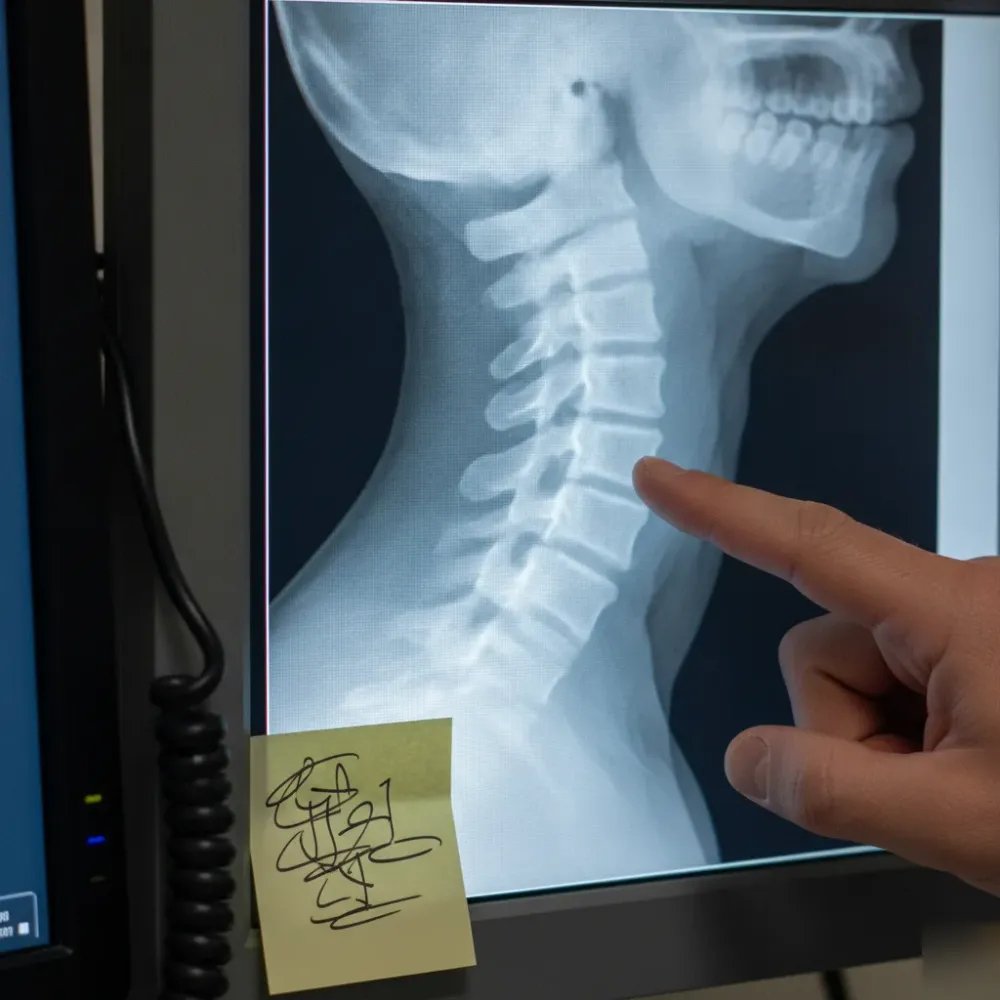
Think about it this way. You wouldn’t diagnose a squeaky door hinge by looking at it closed. You’d open and close it to see where the problem is. Same idea here. We’re watching your spine in real time, under real stress, doing the things that cause you pain every day in Denver.
Here’s what we can see that static imaging misses:
It happens more than you’d think. Someone comes in with neck pain, they’ve had regular X-rays, maybe even an MRI. Everything looks “normal.” But the second we run a motion study, there it is. Two vertebrae sliding past each other every time they look up. That’s the kind of finding that changes a treatment plan completely.
The imaging records a sequence of your spine moving through its full range. Our team reviews it frame by frame. We’re looking for millimeters of abnormal motion, the kind of thing you can’t feel with your hands during an exam. Motion-based imaging can reveal ligament injuries that standard X-rays miss in a significant portion of whiplash cases.
For patients across Denver, this is especially relevant after fender benders on I-25 or icy road collisions. Your spine might feel okay standing in line at the grocery store. It’s the turning and bending that triggers everything. Motion X-Ray Analysis shows us exactly where and why that happens, so we can build a plan around what’s actually going on inside your spine.
You’ve probably been there. You’re in real pain. Your neck locks up, your lower back won’t let you sleep, or your shoulder catches every time you reach overhead. So you go get an X-ray. Maybe even an MRI. And the report comes back saying everything looks “normal.”
But you know it’s not normal.
Here’s what most people don’t realize about standard imaging. Those pictures are taken while you’re completely still. You’re standing in one position or lying flat on a table. The camera captures a single frozen moment. That frozen moment might look perfectly fine because your bones are aligned when you’re not moving. The problem only shows up when your spine is in motion, when you bend, turn, or shift your weight like you do a thousand times a day driving down I-25 or walking around downtown Denver.
We hear this story constantly in our Denver office. A patient brings in a stack of imaging reports that all say the same thing. No fracture. No major disc herniation. No obvious pathology. Yet they’re still hurting. Still limited. Still frustrated because nobody can point to the actual problem.
Standard X-rays miss things like:
Static imaging fails to capture dynamic instability in a meaningful percentage of spinal injury cases. Real structural problems get overlooked, and patients get told their pain is muscular, stress-related, or “just something you’ll have to manage.”
That’s not an answer. That’s a dead end. And if you’ve been stuck in that cycle, Motion X-Ray Analysis exists to break you out of it. It shows what’s actually happening inside your spine while it moves, the way it moves in real life. Not posed. Not frozen. Real movement, real answers.
You might wonder if motion X-ray analysis is right for your situation. We recommend it for a wide range of people who walk through our doors here in Denver. But some cases benefit more than others.
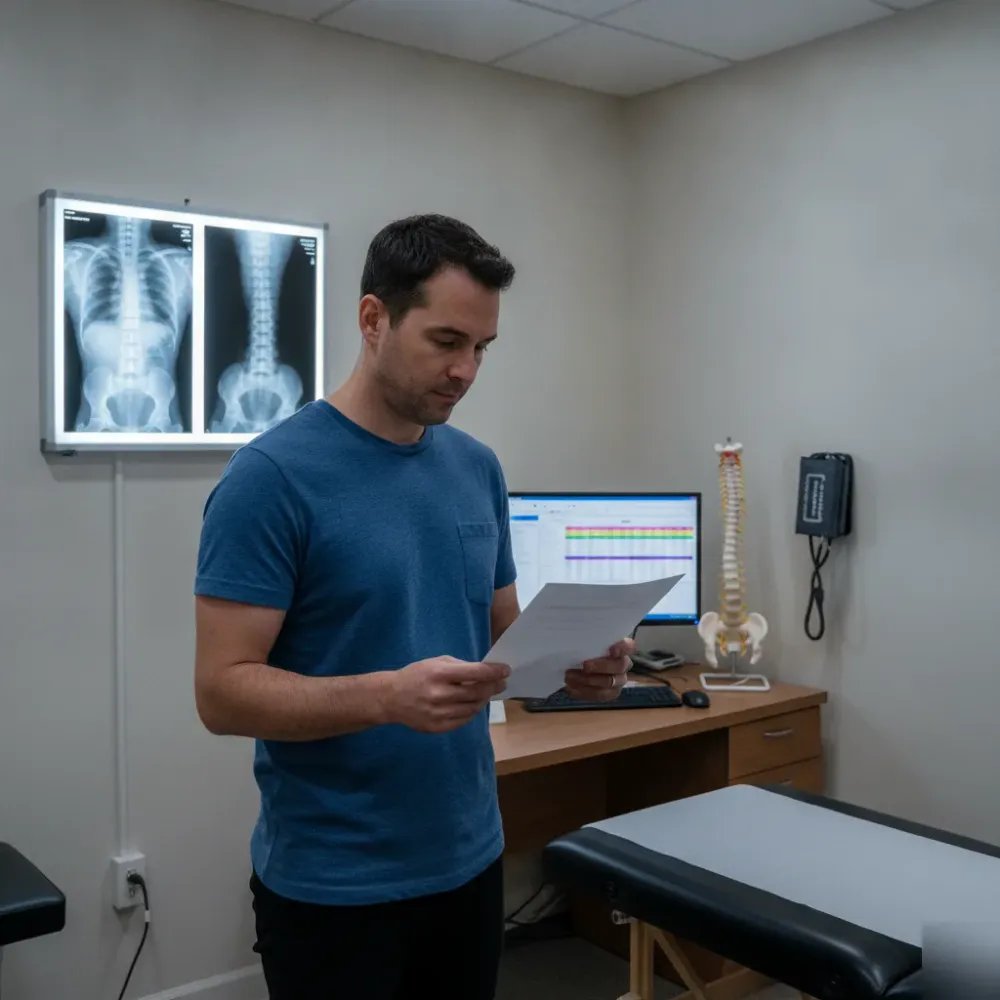
The patients who get the most out of this technology are the ones who’ve been stuck. Maybe you’ve tried chiropractic adjustments, physical therapy, even injections. Nothing lasted. That’s usually a sign the root problem hasn’t been identified yet. It’s hiding in how your spine moves under real-world conditions.
Certain conditions come up again and again when it comes to motion studies. Here are the ones where this imaging makes the biggest difference:
It comes up all the time. Someone walks in frustrated because their MRI looked “normal” but they’re still hurting. A motion study catches what static images miss.
Car accident patients in Denver make up a big part of our motion study cases. Insurance companies and attorneys often need objective proof of ligament damage, and a standard X-ray taken while you’re standing still simply can’t show that. The motion component reveals instability that matters for both your treatment plan and your personal injury case.
But it’s not just injury cases. Patients dealing with scoliosis benefit because we can see how their curves behave during movement. Seniors with joint stiffness get clearer answers about what’s actually limiting their range. Even younger patients with sports injuries gain a lot from seeing exactly where their spine isn’t tracking correctly.
Not sure if this applies to you? That’s actually pretty common. Most people don’t realize how much information they’re missing until they see their own spine in motion on screen. That one finding can change everything about how we approach your care.
Need help with Motion X-Ray Analysis?
Schedule Your Initial Examination. Glendale Chiropractic is ready to help.
You walk in, we talk. That’s how it starts. No clipboard stack. No long wait in a cold room. We want to hear what’s going on with you before we do anything else.
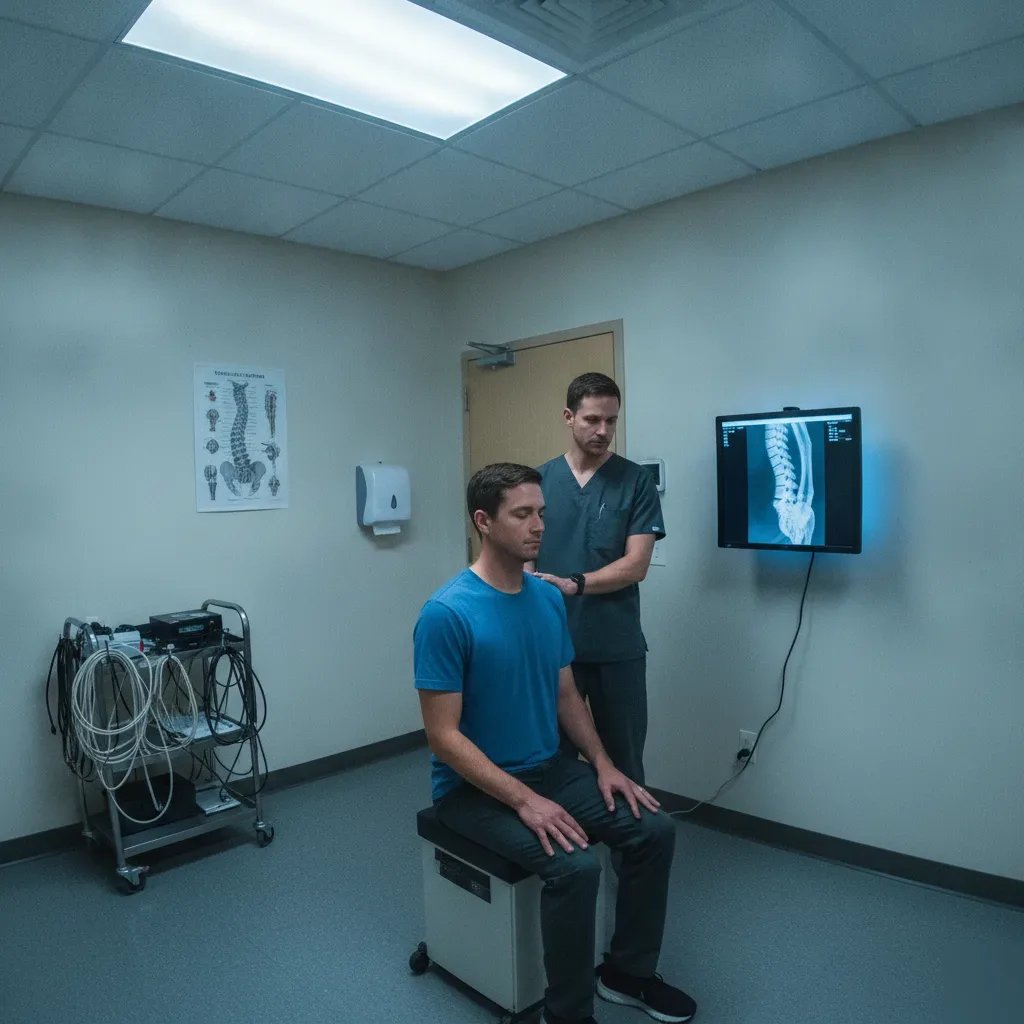
Once we’ve covered your symptoms and history, here’s how the motion X-ray analysis itself works:
That last step matters more than people think. We don’t hand you a report and send you home. You see your own spine moving. You see where it stops moving, and you see the segments that shift too far. It clicks for people in a way that words on paper never do.
Most patients in Denver tell us the same thing. “I’ve had X-rays before, but nobody ever showed me what was actually happening.” That’s the difference. A still X-ray is a snapshot. Motion X-ray analysis is the whole story.
There’s no special prep on your end. Wear comfortable clothes you can move in. You don’t need to fast or stop any medications. Exposure levels are comparable to a standard X-ray series.
But here’s what catches people off guard. The appointment feels fast. You’re not stuck in our office for hours. We get clear answers quickly. From there we can build a real plan, whether that involves chiropractic adjustment, traction therapy for neck and back, or another approach that fits what the motion study reveals.
Ready to see what’s really going on? Give us a call.
Here’s where motion X-ray analysis really pays off for you. We don’t just look at the images and file them away. Every frame of your study tells us something about how your spine actually moves under stress, and that changes everything about what we do next.

A lot of patients come to us from other offices in Denver where they got standard X-rays. Those images showed bones sitting still. But your pain doesn’t happen when you’re standing still, does it? It happens when you turn your head to check a blind spot. Or when you bend down to pick up your kid. Motion studies capture those exact moments.
So what do we do with what we find? We build your plan around it. Not around a textbook. Not around a guess.
When we review your motion study, we’re looking at specific things that guide our next steps:
Sometimes the segment causing your pain isn’t the one that’s actually damaged. We see this constantly with patients who’ve been treated in the wrong spot for months. The motion study shows us the real source.
If your images reveal ligament laxity, we might recommend traction therapy for neck and back or Denneroll cervical traction to restore proper curves. If we see restricted motion in specific vertebrae, a targeted chiropractic adjustment makes more sense than a general one. And if the study shows post-accident instability, your personal injury chiropractic evaluation gets backed by objective proof that holds up in any setting.
Your treatment plan becomes precise. Exactly which level to adjust, how much force is appropriate, what to leave alone. That’s the difference between hoping something works and knowing why it should. For cases needing structural measurement alongside motion data, we combine this with advanced x-ray analysis or a DynaROM motion study for a complete diagnostic picture. Want to see what your motion study reveals? Give us a call.
Common questions about Motion X-Ray Analysis in Denver
Motion X-ray analysis records your spine while it actually moves, not while you hold still. A regular X-ray or MRI takes one frozen snapshot. That snapshot can look completely normal even when real damage exists. Motion studies catch things like vertebrae sliding past each other or ligaments that only fail under movement. For Denver patients who’ve been told their imaging looks fine but still feel pain, this is often the test that finally finds the answer.
Bring any previous imaging reports you have, including X-rays, MRIs, or CT scans. Those help us compare what static images showed against what the motion study reveals. Wear comfortable clothing you can move in freely. If your pain started after a car accident on I-25 or a similar incident, bring any accident reports or insurance claim numbers. The more context you give us upfront, the more useful your results will be.
The imaging at the imaging center takes about 15 to 30 minutes. Once films are returned to our office, we perform the full analysis and review findings with you at your follow-up visit. Most Denver patients get a full review and explanation during the same visit or within a day or two. You won’t be waiting weeks to find out what’s going on.
Yes, and this is one of the most common reasons Denver patients come in for a motion study. Standard X-rays taken at the ER after a crash often look normal, but ligament damage only shows up during movement. Insurance companies and personal injury attorneys need objective imaging evidence to support a claim. A motion study provides that documentation in a way a static image simply cannot. Fender benders on I-25 or icy road collisions are exactly the scenarios where this matters most.
Motion X-ray analysis uses low-level radiation, similar to standard X-ray imaging. The exposure is brief and carefully controlled. It is considered safe for most adults, including those who have had prior imaging done. If you have specific concerns about radiation sensitivity, mention that when you schedule your Denver appointment. We only recommend this study when the diagnostic benefit clearly outweighs any minimal risk, which for most chronic pain and injury cases it does.
Once we identify the problem, we build your treatment plan around what the imaging actually shows. If your motion study reveals vertebral instability or ligament damage, that changes how we approach your care. We won’t guess or treat symptoms generically. Denver patients dealing with chronic neck pain, recurring headaches, or post-accident symptoms often find that having a clear diagnosis is the turning point. You finally know what you’re dealing with, and we can move forward with a plan that targets the real issue.
Schedule Your Initial Examination. Call +17208891659 today.